In the contemplative quiet of Yom Kippur, we pause to consider times in which we acted poorly towards God and those around us. It is obviously hard to reflect on such moments and take responsibility for our mistakes, especially when the people we hurt are those closest to us. Today’s story takes us along a single path of repentance and reconciliation.
What happens when a man walks out on his brother’s wedding? For decades the answer to that question has shaped the relationship between Mario and Jorge Karpuj from Córdoba, Argentina.
Act TranscriptMario Karpuj: We grew up in a world, or in a mindset, in which your choosing to marry a non-Jewish person mostly meant that you didn’t have much interest in continue to be part of this tradition, of this people.
Mishy Harman (narration): Hey listeners, I’m Mishy Harman, and this is Israel Story. So just on schedule, it’s Yom Kippur once again. Here in Israel, at least in the Jewish parts of the country, the usual hustle and bustle will come to a rare standstill, the emptied streets will fill up with kids on bikes, and the sound of prayer will come from every direction. In the relative quiet, many of us will pause to consider those times in which we “missed the mark” – instances in which we acted unkindly, or foolishly or thoughtlessly towards God and towards those around us. It’s obviously often hard to reflect on those moments and take responsibility for our mistakes, especially when the people we hurt are those closest to us. Today’s story takes us along the path of repentance and reconciliation of one man, Mario Karpuj, Adina Karpuj’s father. Here they are.
Adina Karpuj: OK, Papito.
Mario Karpuj: Hola.
Adina Karpuj: Hola, como estas?
Mario Karpuj: Muy bien [goes under].
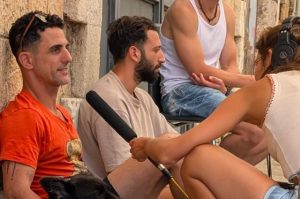
Adina Karpuj (narration): I call him “Papi” or “Papito,” and I asked him to tell me about a painful saga that, for years, had sort of been in the background of our family history.
Mario Karpuj: Should I speak with my American accent? [laughs]
Adina Karpuj (narration): Our conversation touched on family. And religion. And the kind of strains they can, and often do, place on each other.
Adina Karpuj: Can you start by introducing yourself?
Mario Karpuj: My name is Mario Karpuj. I was born in Argentina, close to thirty years a congregational rabbi in Cuba, in Chile, and in the United States before moving to Israel a year-and-a-half ago.
Adina Karpuj (narration): The whole story begins in their hometown of Córdoba, Argentina, and centers around my dad and his younger brother, Jorge.
Mario Karpuj: So I grew up in a Jewish home with my parents and two siblings, Jorge and Vivi. A home that was traditional not in the religious sense, but culturally, and very Zionist. On Chol HaMoed Pesach we will go to school and in the cafeteria, instead of selling you ham and cheese sandwiches with bread, they will sell you a ham and cheese sandwich with matzah [Adina laughs].
Adina Karpuj: Growing up did your family go to Shabbat services? High Holidays?
Mario Karpuj: Not until my bar mitzvah.
Adina Karpuj (narration): It was only then – at the age of 13 – that he got to…
Mario Karpuj: Get to know more traditional Judaism. And started myself keeping, little by little, Shabbat and kashrut, and started leading services at the synagogue.
Adina Karpuj (narration): This experience excited my dad tremendously, and sparked something entirely new inside of him.
Mario Karpuj: By 15 or 16 I could clearly see the kind of change that you can inspire in a community, and I felt very inspired by that and decided I wanted to be a rabbi too.
Adina Karpuj (narration): But wanting to be a rabbi in Córdoba in the late ‘70s? Let’s just say it wasn’t an… obvious choice.
Mario Karpuj: I put on a kippah, something that was very unusual. I was one of the only two Jews in town that wore a kippah on a public space. And this was during the juntas in Argentina – the military government. People were not very keen to show that they were Jewish.
Adina Karpuj (narration): When he finished high-school, my dad came to Israel, studied at the Hebrew University and then ultimately enrolled in rabbinical school in Buenos Aires. He married his high-school sweetheart, Analia – my mom – who was a rabbinical student, too. And it was during that time that his little brother Jorge – still back in Córdoba – started dating Pia, a biology undergrad at the local university.
Mario Karpuj: Pia was a traditional Argentinian Catholic person, meaning that like most of Argentina, the church you didn’t go to was a Catholic church, and you met with your family once a year for Christmas and exchange presents.
Adina Karpuj (narration): Even though my dad’s family wasn’t religious, this was a big deal. Jorge told me that their mother, my bobe, was not happy – to say the least – about her son dating a non-Jewish woman. She’d repeatedly bring up examples of intermarriages that had ended in divorce and told him she was sure he’d regret marrying her.
She was talking from experience: She’d seen her own parents sit shivah, no less, when her brother had – quote unquote – “married out.” And though she wouldn’t dream of doing the same, she worried about her son and the entire family’s reputation.
All of this ultimately got to Jorge. He wanted to please his mom, and do right by everyone. And deep down, he kind of agreed with her. He, too, felt a sense of disappointment whenever he heard about others in the community who married non-Jews. He loved Pia, but he felt like he was betraying his family, and himself. They broke up.
And then…
Archival Tape I: [Sirens] [In Spanish] The AMIA exploded! The AMIA exploded! Urgent! Send one to the air, Bianco!
Mario Karpuj: In July of 1994 there was the bombing of the AMIA – the Jewish Federation of Buenos Aires.
Archival Tape II: A suicide driver blew up a van filled with explosives, killing eighty-five people and wounding more than two hundred [goes under].
Archival Tape III: [In Spanish] 10:07 AM. Urgent! Gordo Feldman. There has been a strong explosion in the center of the federal capital. Urgent!
Mario Karpuj: That terrible event mark this liminal moment for both myself and Jorge. During that week, we were both around the debris of the destruction of that place. I was a recently ordained rabbi accompanying and helping the families of those who died in the attack and helping them identify their loved ones. And Jorge was helping in the debris trying to find survivors of the bombing.
Adina Karpuj (narration): The terrorist attack moved both my father and his brother Jorge to action.
Mario Karpuj: A week after that bombing I told Analia, my wife, that I didn’t want to raise our family in that country, not because we were afraid of the security but basically because there was a strong feeling that there was no political will to actually solve the case and find those who did it.
Adina Karpuj (narration): And indeed, in February 1995, seven months after the AMIA bombing, my parents left Argentina for good. Jorge stayed.
Mario Karpuj: And Jorge, in those days, called Pia – who was in Buenos Aires – and met again with her and that’s the beginning of their relationship that lasted for the next close to thirty years. By the time they got engaged I was in Chile. So I flew to Buenos Aires from Chile to talk to him. At that point I was like… I was trying to talk to him into like “do you really understand what you are doing? What’s the plan? How are you planning to raise together a family?” I don’t know, I wanted to… I felt that I needed to try to make him understand all the difficult decisions that he will have to make and how that thing will work. I was not trying to convince him not to do it. At the same time, I didn’t go with the mindset of like “mazal tov on your decision, how can I help you succeed?” It was not that.
Adina Karpuj: Do you remember their wedding day?
Mario Karpuj: I remember very clearly – it was a very complicated day for me. I don’t know how exactly to describe that [stammers]. Eh… clearly I was not happy. I was sad for that feeling that something has broken. That dream of having a Jewish family had been broken. And when the ceremony was about to begin, I just walked out of the room.
Adina Karpuj (narration): My dad bolted, unable to bear witness to centuries of tradition – of a covenant, a pact – crumbling before his eyes.
Mario Karpuj: I was a just-ordained rabbi who felt like, you know, something was wrong with me because I was a rabbi and my brother have chosen to marry a non-Jewish woman. I felt like it was an impossible thing.
Adina Karpuj (narration): My dad spent the ten-hour-long bus ride home to Viña del Mar crying. He felt as if he had just lost his brother.
Jorge was, understandably, hurt. They stopped calling each other to catch up, and didn’t speak at all for more than a year. Each brother focused on his own career, own family, own grievances. At some point my parents moved to the States, where I grew up.
Meanwhile, following the financial crisis of 2001, Jorge and Pia relocated to Chile.
Mario Karpuj: They eventually had three kids – Emi, Abril and Zoe.
Adina Karpuj (narration): Years passed. My dad and Jorge saw each other infrequently.
When our families did get together, it was usually around a simcha – a bris, a bat mitzvah, a wedding. But Jorge and Pia’s kids, my cousins, didn’t have brises or bat mitzvahs, and that made things noticeably awkward. They were the non-Jews, or at least the not-exactly-Jews, in our otherwise very Jewish family.
Emiliano Karpuj: My… My parents, they decide that me and my sisters could decide what we want to believe and what we want to… to feel.
Adina Karpuj (narration): That’s my cousin Emiliano.
Emiliano Karpuj: Hi I’m Emiliano Karpuj, I’m 23-years-old.
Adina Karpuj (narration): When he was 13, there was some talk about him having a bar mitzvah, but his parents advised him to wait till he was older, and that – as far as I knew – was his last real brush with Judaism. He went to a Catholic high school, and didn’t really have much religion, any religion, in his life.
Emiliano Karpuj: When I get into the university, I met Jewish and Palestine people and I felt in the responsibility of understand all the situation that happens in Israel and with the Jewish people in Chile.
Adina Karpuj (narration): So Emiliano called my dad, the rabbi.
Mario Karpuj: He wanted to talk about the Israeli-Palestinian conflict. And I said, “why do you want to talk about that?” And he said, “because I’m running for office in the students’ center election and as the Jewish candidate they’re asking me in every debate to state my position on that issue.”
Adina Karpuj (narration): Chile, interestingly, has the largest Palestinian population outside the Middle East. And my cousin Emi was, to our (and his!) surprise, being branded as the “Jewish” candidate.
Mario Karpuj: It was a clear indication that the society outside was putting them in that place – you are Jewish – while we, as the Jewish community, we didn’t open the doors for them to walk into that tradition proudly and feeling welcome.
Adina Karpuj (narration): Emi and my dad had a long conversation, a series of conversations actually. They talked about Israel and Judaism, identity and family. He ultimately won those elections for student government, and shortly thereafter – perhaps to feel out a part of his identity that he had never really explored – decided to sign up for a Birthright trip.
Emiliano Karpuj: And for me it was really, really strong. I never felt that way, it was really shocking for me.
Adina Karpuj (narration): When he came back home to Chile, he made a pretty dramatic decision.
Emiliano Karpuj: I’m doing my process of conversion to the Judaism.
Adina Karpuj (narration): He decided to convert. And – as part of the process – to be circumcised, at the age of 23.
Emiliano Karpuj: Yes. It’s the first thing you do in your life as a Jewish. It’s a remindering of the sacrifice and the pact with God. So yes, I think I felt a connection spiritually with that.
Adina Karpuj (narration): My dad has been accompanying Emi in the process. And – in a way – it’s the end of a long journey for him, too.
Mario Karpuj: My close to 30 years in the rabbinate taught me to… to see things not just in white and black. Not every decision that someone makes necessarily means one thing and one thing only. In terms of intermarriage it became clear to me that a person choosing to marry a non-Jewish person does not mean that they don’t care about our tradition, that they don’t want to be part of our tradition. And that when you open ways for them to feel welcome and part of the community, they gladly embrace that opportunity.
Adina Karpuj (narration): My dad feels bad about many things: About walking out on Jorge and Pia’s wedding, about not giving them the support they needed for their interfaith household, about drifting apart, and – maybe more than anything – about not doing more to welcome Emi and his sisters into the Jewish tent.
Mario Karpuj: Today, all over communities in the diaspora, you have this kind of efforts to welcome those who marry a non-Jewish person but give the clear message that they don’t want to leave the tribe. That they want to be part of this tradition. Looking back, I’m really sorry that we didn’t offer that – that I didn’t offer that – because I think that their story in terms of their relationship with our tradition could have been different from the get-go. I feel guilty about that.
Adina Karpuj: Tell me a little bit about the reconciliation.
Mario Karpuj: Some years ago Pia got sick, she got cancer. And she recovered from that. And Abril became 15, so they decided to organize a big quinceañera and the entire family came. We all felt like it was both to celebrate Abril and to celebrate the fact that Pia had recovered from cancer. And we have this beautiful weekend of celebration and during that weekend I… I talked to them and I basically apologized for my lack of empathy when they started in their journey as a family, not being more present in helping them navigate all these things. They accepted it. And from that time on, every time I spoke to… to Pia there was a sense of closeness and of love and of closure.
Adina Karpuj (narration): My dear aunt Pia passed away suddenly in November 2020, twelve days after her fiftieth birthday. Her son Emiliano, and his two sisters, Abril and Zoe, celebrated their joint bnei mitzvah – a mega mitzvah, if you will – this past May.
[Tape from “mega mitzvah”]
Adina Karpuj (narration): It was rosh hodesh – the first day of the Hebrew month of Iyyar – and as my father said in his blessings, just like the moon at the beginning of the month, though we couldn’t see Pia, her spirit was very much with us.
[Tape from “mega mitzvah” cross fades into end song]
Our end song is Cholem B’Sfaradit (“I Dream in Spanish”) by Shlomo Yidov.
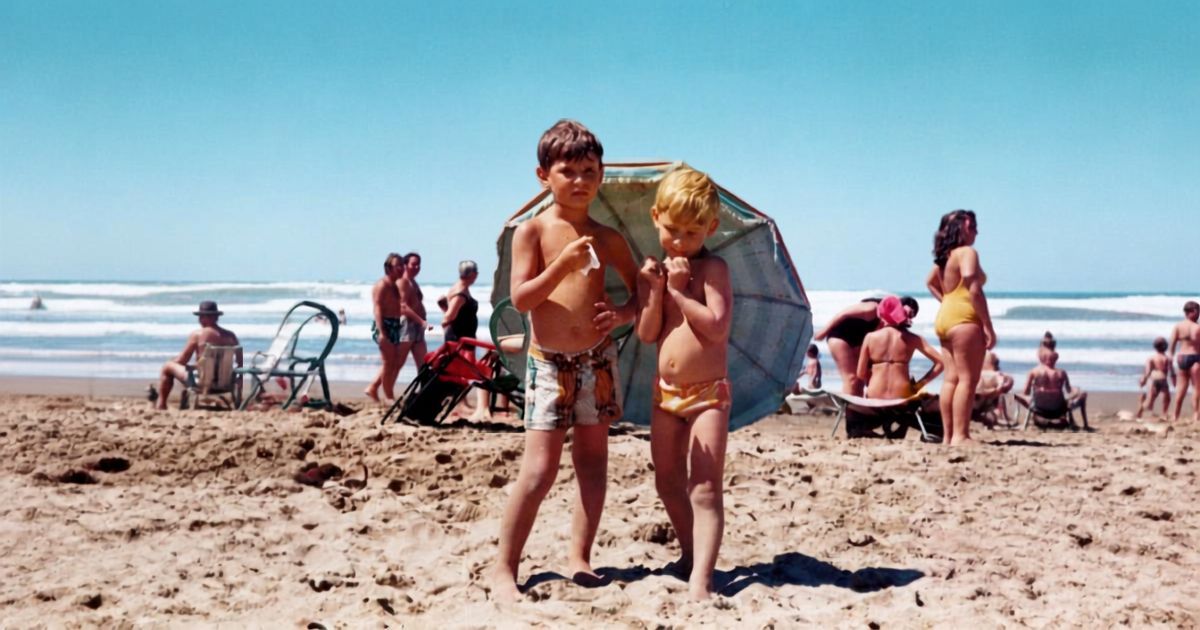
The episode image is courtesy of the Karpuj Family.