
This incredible tale includes some fine caviar, Persian carpets, the malignant presence of a possibly former-Nazi zookeeper, a cameo from a sensuous Mossad agent and cold-blooded murder. We know we are promising a lot, but this is the improbable, totally true story of a flying Dutchman and some of the last “olim” to leave Iran before the Revolution.
In late 1978, during the final and frantic days of the Shah’s regime, an unlikely Israeli envoy – a cross between David Attenborough and Jason Bourne – landed in Tehran. His secret mission was to bring back something certain powerful people in Israel sorely wanted.
Act TranscriptMishy Harman (narration): Hey, I’m Mishy Harman, and this is Israel Story. Our episode today, “Frankly, My Deer” (that’s deer, double e).
Jimmy Carter: Iran, because of the great leadership of the Shah, is an island of stability in one of the more troubled areas of the world. This is a great tribute to you, Your Majesty, and to your leadership and to the respect and the admiration and love which your people give to you.
Mishy Harman (narration): That’s US President Jimmy Carter. He was the guest of honor at a state dinner in Tehran’s Niavaran Palace. Raising his glass and offering up a toast, he said…
Jimmy Carter: I asked my wife, “with whom would you like to spend New Year’s Eve?” And she said, “above all others, I think, with the Shah and Empress Farah.” So we arranged the trip accordingly and came to be with you.
Mishy Harman (narration): The clock would soon strike midnight and 1978 would begin. That year would also turn out to be the one in which the Shah’s long-standing dynasty would entirely disintegrate. The spark of Islamic revolutionary fervor was lit in the holy city of Qom in January and from there it spread across the country.
ABC News: Every day here now the demonstrations and arrests go on. Rumors in Tehran say people are being armed and may soon start firing back at the troops.
Mishy Harman (narration): In August, with protests raging in three dozen cities throughout Iran, martial law was declared.
ABC News: The number killed in Tehran since the beginning of the month is probably well over a hundred. But people in this crowd were saying and believing seven thousand had been killed. Emotions over the dead and the rumors of dead are high.
Mishy Harman (narration): The country quickly devolved into chaos.
60 Minutes: There was genuine fury here. A protest not simply for political freedom but against low wages and high inflation, against huge military expenditures, against corruption and foreign influence.
Mishy Harman (narration): And orchestrating all this, fanning the flames from the sleepy village of Neauphle-le-Château in northern France, was the exiled Shiate cleric Ayatollah Rohallah Khomeini.
French Newsreel: [In French] This man, under an apple tree, is the most prestigious cleric of the Shiite religion, the toughest rival of the Shah of Iran. He is the Ayatollah Khomeini in his retreat in Neauphle-le-chateau after 15 years of exile in Iraq.
Mishy Harman (narration): Khomeini pitched a tent in the garden of his rented residence at 67 Route de Chevreuse and turned it into his revolutionary headquarters. It was there that he met with journalists, diplomats and activists. And it was there that he’d deliver subversive sermons into a cassette recorder. In his calm, steady and defiant voice he called for a new, and deeply Islamic, Iran.
Rohallah Khomeini: [In Farsi] Islam is unknown to these people. They are not familiar with Islam.
Mishy Harman (narration): The tapes with the recorded sermons were then played over the phone to revolutionaries in Iran, who sat on the other end of the line with recorders of their own.
Rohallah Khomeini: [In Farsi] Because they don’t know Islam, they think if the people are poor, they are under dictatorship.
Mishy Harman (narration): Before long, these tapes were being passed from hand to hand in tens of thousands of mosques and markets. There was, of course, no free press under the Shah’s authoritarian dictatorship, so Khomeini’s words traveled underground, igniting a revolution one tape at a time.
60 Minutes: When he speaks, millions of Iranians listen. He tells them the Shah should be arrested, tried for crimes against the state, and ousted. And that a Muslim state should be established.
Mishy Harman (narration): On January 16th, 1979, just over a year after that celebratory New Years Eve bash with President Carter, the Shah – Mohammad Reza Pahlavi – departed Iran with his family. They left for Egypt, in what was officially billed as a private vacation.
Walter Cronkite: Good evening, a tearful Shah of Iran left his country today on a vacation from which he may never return. Bob McNamara is there….
Mishy Harman (narration): Meanwhile traveling in the opposite direction was the exiled Ayatollah. On February 1st, millions greeted the venerated revolutionary upon his arrival.
AP News Reel: The people were in a frenzy to catch just a glimpse of the man they revere like a God.
Mishy Harman (narration): And amid all this upheaval – amid a revolution that changed the world and continues to shape global affairs till this day – an Israeli envoy by the name of Mike van Grevenbroek landed in Tehran on a secret mission.
This is his story.
It takes place during the final, frantic days of the Shah’s regime and includes some caviar, fine carpets, the malignant presence of a possibly former-Nazi zookeeper, a cameo from a sensuous Mossad agent and cold-blooded murder.
I know I’m promising a lot. But this is the improbable, totally true story of a flying Dutchman and some of the last ‘olim’ to leave Iran before the Revolution. Our producer Mitch Ginsburg will take it from here.
Mitch Ginsburg (narration): A while ago a man by the name of Amir Balaban came into our offices in Jerusalem. He didn’t really know me, but I immediately recognized him. I knew that he had a background in the clandestine world and that – for decades – he’s devoted himself to the protection and preservation of Israel’s wildlife. I’m not really sure why, but I cornered him at the coffee machine. I told him that I’d heard the story of the airlifting of the wild striped ass out of the Danakil Desert in Ethiopia – a mission for which the Parks Authority managed to enlist the assistance of the Israeli Air Force – and I asked him if that was the craziest story he knew from the world of animal conservation. He shook his head, chuckled into his coffee, and said “no, there’s a wilder one. It’s about a Dutchman, a sort of cross between David Attenborough and Jason Bourne. A man who gathered and traded and bargained for animals all across the Middle East and then transported them home in all kinds of unlikely ways.” He described the man and sent me his number. He said he lived on a remote ranch in the Negev Desert, and that he was getting on in years. So if I wanted to talk to him, the time was now.
I called him up and scheduled a visit.
When I met Mike he was in his eighties. He had a deep voice, broad shoulders, and a very soothing manner. We spoke in the living room of his desert home which was made out of a series of interconnected railroad cars. He started, as one often does, at the very beginning.
Mike van Grevenbroek: I was born in the… in the last couple of years of the Second World War, and straight after the war my parents decided ‘let’s leave Holland and go to one of the colonies we still have.’
Mitch Ginsburg (narration): In the different versions of Mike’s life, I’ve heard it said that he was raised in the Indonesian jungle or on the grassy savannas of South Africa. But really…
Mike van Grevenbroek: We went to Curacao and there I spent twelve years of my youth, most of the time on the beach.
Mitch Ginsburg (narration): When he was in high school his parents yanked the flippers off his feet and shipped him back home, to the town of Zeist, to continue his education. He eventually began a degree in tropical agriculture, hoping – I guess – to return to his Caribbean lifestyle. There was a mandatory apprenticeship at the end of his studies, and his university offered two options – Kenya or Israel. Though he wasn’t – and isn’t – Jewish, Mike chose the latter. He arrived in Israel in September 1965, and was placed in Kibbutz Yad Mordechai, south of Ashkelon, which – needless to say – is a rather arid location for advancing a degree in anything tropical. But Mike – then and now a mellow, easy-going kind of guy – figured it would do just fine. On one of his first days on the kibbutz, while working with the cows in the dairy shed, he went out for a walk and spotted a flock of plump-looking partridges, chukars is how they’re called here. He wondered aloud if he could shoot a few and his companion said “yes, he could, but only if he had a permit.” And those, he explained, could be obtained only at the Israel Nature and Parks Authority’s main offices. Soon thereafter, on a rare day off, Mike went down to the headquarters and was bounced from one office to the next until his presence caught the attention of the Director-General, a man by the name of Avraham Yoffe, who – though more than a generation older than Mike and an active Major-General in the Israel Defence Forces – turned out to be a kindred spirit. Yoffe quickly became a sort of father figure to Mike, and the Dutch student – like many others in Yoffe’s circle – started calling him by his nickname, “Avrum.” Here he is.
Avraham Yoffe: [In Hebrew] Actually the only people missing were the limp or crippled…
Mitch Ginsburg (narration): In a recording I recently dug up from the State Archive, you can hear Avrum talking about the unit he commanded, noting that the only reservists who didn’t show up for duty were the lame, the limp, and the lost. But throughout this oral history of the Six Day War, he kept steering the conversation toward… nature and animals. Finally his interviewer says…
Interviewer: [In Hebrew] I see that you like animals no less than you like soldiers.
Mitch Ginsburg (narration): “I see that you like animals no less than you like soldiers.” Avrum says, “yes, absolutely.” He loves nature above all else, and definitely more than anything that can shoot. But please don’t be confused – Avrum was no tree-hugging pacifist. He was a leathery war veteran who – in late 50s and early 60s – had been given the command of both the southern and northern fronts. Nor was he a man particularly well-known for his modesty (upon his retirement from the IDF in 1965, he remarked that he’s sorry to shed the olive green uniform because once he leaves there’ll be no one in the General Staff who even looks like a general).
In 1964, while still serving as the Head of the Northern Command, Avrum was named the first Director-General of the Israel Nature and Parks Authority. Apparently, those were the days in which it still made sense to hold two such weighty, and wildly different, jobs. Anyway, the general, whose favorite hobby was actually spearfishing off the coast of Haifa, took to the newly-added role with a passion. He asserted control over lawless lands, banned hunting – which he once used to thoroughly enjoy – and lobbied for a bylaw that somehow became the most adhered-to provision in Israeli public life – namely the prohibition against picking wildflowers. And then he set his sights on what would become his life’s work and driving passion: The restoration of the animals of the Bible to the Land of the Bible.
By that Avrum didn’t merely mean filling cages in a bible-themed zoo; that was already happening, even though the Jerusalem Biblical Zoo famously had to keep replacing the poor lamb that was put in the exhibit with the wolf. No, Avrum meant something different altogether – to return the animals to the actual land, so that they’d roam the valley of Jezreal and the iris-dotted slopes of the Gilboa.
In a way, he hoped to restore the landscape of his own childhood. See, Avrum was born near the Kinneret in 1913. And even just during the first forty years of his life he had seen many of the animals of the Bible erased from the map of Israel.
Sigalit Herz: Like the bears, the Syrian brown bear, is 1917.
Mitch Ginsburg (narration): This is Dr. Sigalit Herz, the Director-General of the Biblical Zoo in Jerusalem, where – in case you were wondering – lambs are no longer sacrificed to make a biblical point.
Sigalit Herz: The crocodiles were here until the beginning of the 20th century, the lapped-faced vulture, the leopards were extinct only forty years ago, the cheetahs–we used to have cheetahs in the Arava until 1960.
Mitch Ginsburg (narration): Lamenting all that was lost, Avrum – like so many early Zionists – looked to the Bible as a guide of what could and should be. He believed in the Bible’s territorial promises and its descriptive prowess, and he believed that just as every Jew ought to return to the Land of Bible, so too should every animal in the Bible be brought back to the Land of the Bible.
Genesis 7: Of every clean beast thou shalt take to thee by sevens, the male and his female and of beast that are not clean by two…. [fades out].
Mitch Ginsburg (narration): And Avrum…
Danny Yoffe: He was a very, very powerful person, and when he wanted something, he rushed into it.
Mitch Ginsburg (narration): That’s Avrum’s son, Danny.
Danny Yoffe: He was a Zionist and a nature lover. And eh, yes he was… he was imagining… he was imagining things and brought them into… into to life.
Mitch Ginsburg (narration): As head of the Israel Nature and Parks Authority, Avrum decided that repatriating the animals of the Bible to their ancestral homeland would be his crowning jewel. His life mission. His Noah’s Ark. But just as Noah had his three sons by his side, Avrum knew he too would need help.
Danny Yoffe: And my father always said that it is not a work for Jews. It should be a goy to do it.
Mitch Ginsburg (narration): All of which sent him in the direction of Mike van Grevenbroek, the young Dutch agriculture student milling around his offices.
Danny Yoffe: And when he found Mike, he said “this is the guy!”
Mitch Ginsburg (narration): The two burly men – separated by thirty years, religion nationality and history – immediately took to one another.
Mike van Grevenbroek: He was a fantastic guy. I loved him.
Mitch Ginsburg (narration): Guided by nothing other than his gut, Avrum felt sure that the young Dutchman – of all people – was the missing part of his master plan. Now ‘plan’ might be slightly overstating it. Because even by Israeli standards, Major General Avraham Yoffe was very improvisational.
Avrum told Mike all about an acacia-studded desert enclosure in the Arava wilderness, where he envisioned placing the animals before they’d be released back to the wild.
Mike van Grevenbroek: He came out with a beautiful prospect with endangered species, all of them in it, and this and that, and a big area.
Mitch Ginsburg (narration): He hyped up the reserve so much that Mike couldn’t wait to see this Israeli Sarangetti. But when the Dutchman traveled south to have a look for himself…
Mike van Grevenbroek: I couldn’t find it. “No, no,” Avrum says, “I forgot something to tell you – you have to make this.
Mitch Ginsburg (narration): Yet Mike – the beach-boy from Curacao – wasn’t phased. Avrum started telling him exactly which animals he wished to gather.
Mike van Grevenbroek: “Get me this, get me that, get me that.”
Mitch Ginsburg (narration): And so began Mike’s career as what we might call the Israel Nature and Parks Authority’s secret agent. Its man for special ops.
Mike van Grevenbroek: One was from Chad and one was from Holland and so all different countries.
Mitch Ginsburg (narration): And so throughout the late 60s and early 70s, Mike found himself in all kinds of strange corners of the globe, on official – yet often secret orders – from his friend Avrum, the head of the Israel Nature and Parks Authority.
Mike van Grevenbroek: We went into the desert to capture the Somali wild asses, the aroud, and they’re beautiful. They have a… a bluish-purple shine on them and they have, below their belly, there are rings around their legs like a zebra.
Mitch Ginsburg (narration): In Ethiopia’s Danakil Desert, aided by no more than a pole and a noose, Mike managed to corral a dozen wild asses. Avrum, having been hung up on by everybody else, called in a favor from his buddy Motti Hod – the commander of the Israeli Air Force. And indeed, soon enough the Dutchman looked up and saw a giant Hercules C-130 coming in for a landing on a pockmarked patch of dirt to ferry the fancy donkeys back to their ancestral home. That, by the way, was the somewhat well-known saga I had asked Amir about near the coffee machine.
In any event, by 1978, Mike had already brought Avrum the Somali wild ass, the Arabian oryx, the onager and the addax, among others. But one animal had thus far eluded them entirely…
Biblical Insert: [In Hebrew] Beside harts and roebucks, and fallow deer, and fatted fowl.
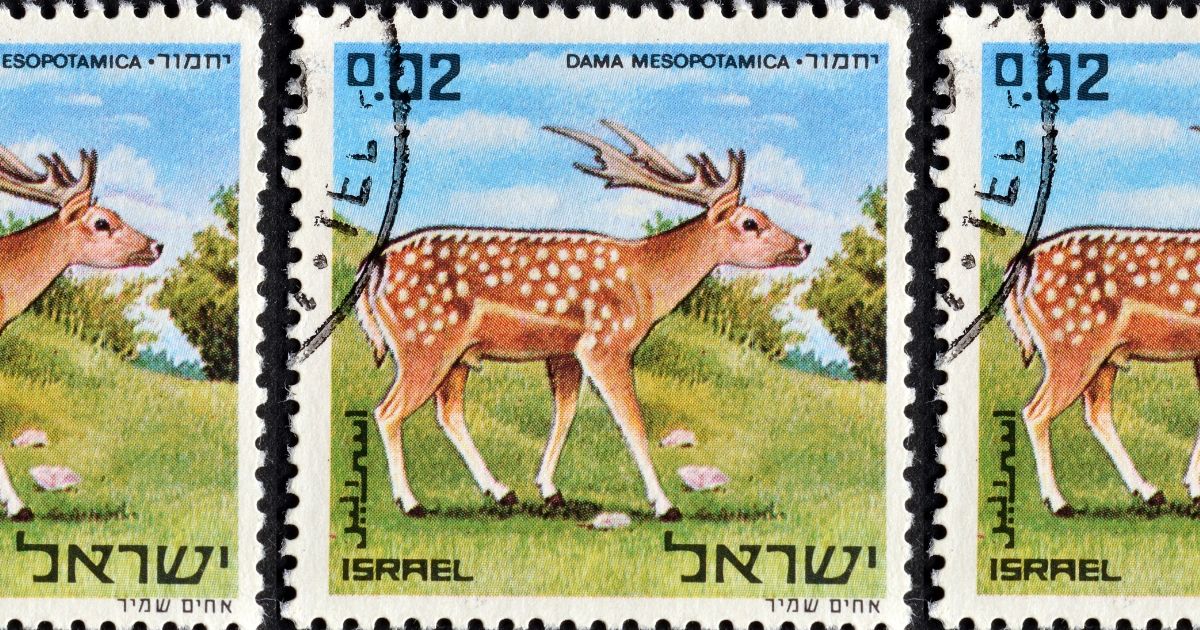
Mitch Ginsburg (narration): The Persian fallow deer.
Mike van Grevenbroek: They were mentioned in the Bible and they lived here until 1800 in Israel.
Mitch Ginsburg (narration): What was once a thriving population, and even – according to the Book of Kings – a fixture on King Solomon’s table, had been pushed to the brink of extinction. By the mid-20th century there was rumored to be, in the whole world, just a single wild herd of Persian fallow deer, roaming the forests in the north of Iran.
Living in the wooded regions near the Caspian Sea, the herd was first spotted in 1955, and appeared to consist of no more than two dozen specimens. Avrum and Mike – eager to bring them home – kept a close eye on their whereabouts.
Mike van Grevenbroek: He wanted them badly.
Mitch Ginsburg (narration): And so using all of his ties with the powers that be, Avrum got himself invited to a luncheon, in Tehran, with the Iranian Prince Abdul Reza.
Mike van Grevenbroek: The brother of the Shah.
Mitch Ginsburg (narration): Over fine cuisine and, I can only presume, an abundance of other luxurious Iranian delights, Avrum cautiously brought up the Persian fallow deer. ‘Might his royal highness,’ he wondered, ‘be willing to part with a few specimens from his elusive and rare herd and either gift or sell them to the State of Israel?’ The prince was unexpectedly amenable, but did have a price. He’d like in return, he said, a certain animal for his private collection of taxidermies; an animal Israel happened to have.
Mike van Grevenbroek: The Nubian ibex we have here in the wild.
Mitch Ginsburg (narration): Avrum’s face turned white. The Nubian ibex was quite literally the symbol and mascot of the Nature and Parks Authority. How would it look if Avrum himself would sanction its slaughter?
He tried to push back, but the prince made it clear that this was the asking price. If Israel wanted its Persian fallow deer, it would have to sacrifice two of its ibex that would be stuffed and flown back to Tehran, where they’d be ceremoniously mounted on a royal wall.
Avrum took the conundrum to Israel’s Agriculture Minister, Ariel Sharon. And Avrum knew what he was doing: Not only was Sharon – a former General and future Prime Minister – his old army buddy, but like Avrum himself, he was a well-known fan of the… improvisational style.
So it perhaps comes as little surprise to learn that – without asking too many questions – Sharon gave Avrum a one-time ‘permission slip,’ written in his own hand, stating that in the “national interests” of the State of Israel two wild ibex may be shot and killed.
Soon enough an Iranian plane touched down in Eilat. The royal insignia on the tail was covered over and out came prince Abdul Reza and his personal hunter. The hunting party proceeded to roam the wadis of Ein Gedi and Sde Boker but were unsuccessful in locating an ibex fit for a prince. The questionable deal that Avrum had struck seemed to be in jeopardy. So once again, the flying Dutchman was summoned.
Mike van Grevenbroek: And one day in the morning, at four o’clock in the morning, they kicked me out of bed, and said, “Mike, you have to go, because we couldn’t find any.” So, I went and in half-an-hour we had the two biggest males ever existing in the country.
Mitch Ginsburg (narration): One of the ibex they bagged was so impressive, it had actually been given a name – Caesar. And its butchering and skinning, in Mike’s Eilat home, drew some unwanted attention.
Mike van Grevenbroek: My neighbor.
Mitch Ginsburg (narration): Enter the nosy neighbor, who also just happened to be the regional head of HaHevra Le’Haganat Ha’Teva, or the Society for the Protection of Nature in Israel, and – as such – knew exactly who Caesar was.
Mike van Grevenbroek: And she saw from the road a whole line of blood going into my house so she walked in and she asked “Mike, everything OK with you?” And then she saw those two dead ibexes and she said “are you crazy? Are you crazy?”
Mitch Ginsburg (narration): Mike pulled his neighbor aside and produced Arik Sharon’s note. He explained to her that she had stumbled on something way above her paygrade and that she’d be wise to keep quiet about it.
Somehow that seemed to work, and the Prince was allowed to return home with his horned trophy.
But the reciprocation was slow in coming. All of Avrum’s requests to come to Iran to pick up the deer that had been promised to Israel went unanswered. The Prince appeared to be ghosting him.
Mike van Grevenbroek: And then suddenly Avraham got a phone call from Iran.
Mitch Ginsburg (narration): It was the Prince himself, who said…
Mike van Grevenbroek: “Listen, I’m in a few days leaving the country because there is a revolution here and we are in danger, so if you want your animals, you have to come now.”
Mitch Ginsburg (narration): This was late November 1978. The turmoil, Abdul Reza explained, was everywhere, and the dynasty was teetering. Avrum understood it was now or never. Israelis already had a very hard time coming in and out of Iran, so Avrum promptly called up his man-for-special-missions and said…
Mike van Grevenbroek: “Are you ready?” I said, “for what?” “Iran. You have to go because you’re the only one in the whole Nature Reserves with the proper passport. If we send Israelis, they never come back.”
Mitch Ginsburg (narration): Mike dutifully packed up his tranquilizer kit and some other tools of the trade and notified his wife that he’d be leaving the country immediately. I asked him if he had been following the news out of Tehran.
Mike van Grevenbroek: Ya, ya, ya, ya, ya, ya, absolutely, absolutely. Ya.
Mitch Ginsburg: But you weren’t worried?
Mike van Grevenbroek: Heh? No, no, no, no. Eh, I’m not so quickly worried.
Mitch Ginsburg (narration): It was precisely for these kinds of sensitive missions that Mike kept no less than four Dutch passports. After all, he told me, you don’t want the authorities in Tehran asking what you were doing in Kuwait or an immigration officer at Heathrow inquiring what sort of business you had in the hinterlands of Haile Selassie’s empire.
In any event, the Dutchman quickly snatched the appropriate documentation and made his way to an airfield in Eilat where a small piper cub was all set to fly him to the international airport in Lod. Mike approached the plane, and found a gorgeous woman waiting for him on the tarmac.
Mike van Grevenbroek: Beautiful. Beautiful. Very exotic.
Mitch Ginsburg (narration): She introduced herself as Shoshana.
Mike van Grevenbroek: Shoshana was a spy in Iran.
Mitch Ginsburg (narration): She’d been sent by Avrum to prep Mike for his Persian mission. With no time to spare, she dove right in.
Mike van Grevenbroek: And she said, “Mike, from now on no shaving anymore. Put a hat on, and put it right over your eyes that nobody sees you have blue eyes.” And she gave me a little bit of a lesson in behavior and this and that and what to do.
Mitch Ginsburg (narration): And with that he was off.
Mitch Ginsburg (narration): As tens of thousands were trying to get out of Iran, Mike found himself heading in the opposite direction – on a nearly empty, Tehran-bound aircraft.
Avrum, of course, was the mastermind of the operation. Relying, as usual, only on back channels, he opted not to brief Yossef Harmelin, the Israeli ambassador in Iran, but rather to trust one of Harmelin’s subordinates, who – surprise surprise – was a former soldier of his. He called the man up and told him about Mike’s imminent mission.
Itzik Segev: He told me “General Segev, I’m giving you now order – you will bring the fallow deer!”
Mitch Ginsburg (narration): Brigadier General Itzik Segev was, at the time, Israel’s military attaché in Tehran. But more importantly, for our purposes at least, he – like Mike – was a full-fledged member of the ‘Noah’s Ark Crew.’
So when Mike’s flight touched down at Mehrabad International Airport on November 28th, 1978, Itzik was there to greet him.
Itzik Segev: So I told him, “listen, Mike, no one come to Iran these days. Welcome!”
Mitch Ginsburg (narration): General Segev, whose hands were more than full trying to get El-Al tickets for Jews desperate to leave the country, secured two, off-road vehicles, had them filled up with gas that had been flown in especially from Israel, put together a local crew, and made a reservation for Mike at a nice local hotel. Mike settled in, ready for his adventure to begin the following day.
Mike van Grevenbroek: I had caviar and everything, a fancy dinner, absolutely beautiful. And then I went up to my room, and the next morning I woke up, went down to the breakfast room: Nobody. The day before the hotel was full of beautiful Persian carpets, not one anymore. Everything ripped off. Empty. Nobody at the lobby anymore, finished.
Mitch Ginsburg (narration): So Mike and his newly-assembled crew quickly jumped in their jeeps, and headed off to the northern highlands of Iran.
Mike van Grevenbroek: Off we went. Roadblocks, roadblocks and roadblocks and roadblocks.
Mitch Ginsburg (narration): The lines outside the gas stations stretched on for miles. People were clearly eyeing their full jerrycans of gasoline.
Mike van Grevenbroek: And it’s a long drive, because you have to get out of the valley from Tehran and then you go up in the mountains and then you reach the high plateau and you get in a complete different area that is a European climate.
Mitch Ginsburg (narration): Though it was only late-November, the landscape leading up to the Semeskandeh Reserve – where the fallow deer were rumored to be – was already blanketed in snow. Mike arrived at his destination and took stock. To catch the deer, he realized, he’d need good netting and that meant going to Baku, Azerbaijan, and buying some off the local sturgeon fisherman.
I mean, after coming all the way from Eilat, what’s an extra thousand mile round-trip detour for some netting?!
Anyway, once that was accomplished, he recruited a crew of local bushcutters, who helped spread a loose, translucent wall of netting through the dense brush. But the furtive Persian fallow deer, or dama mesapotamica, proved to be very elusive indeed.
Mike van Grevenbroek: Ya, it was very hard. Because they are superbly strong and they have very sharp hooves. So if one is in the net, to hold her down you need four or five people. It’s a big deer. It is not a regular fallow deer.
Mitch Ginsburg (narration): No no no. It is a Persian fallow deer.
Mike van Grevenbroek: It is a big, big deer.
Mitch Ginsburg (narration): After several failed attempts – some deer jumped right through the imported netting, others got around it – they finally managed to corral one of the males, which got stuck with its massive antlers.
Mike van Grevenbroek: We put him in the box, we crated him.
Mitch Ginsburg (narration): They returned to their camp with the deer and went to bed, elated.
Mike van Grevenbroek: And the next morning, dead.
Mitch Ginsburg (narration): Mike was heartbroken.
Mike van Grevenbroek: They killed it.
Mitch Ginsburg (narration): “They” being local Khomeini-supporting villagers.
Mike van Grevenbroek: They killed it because they heard that they were going to Israel.
Mitch Ginsburg (narration): The buck, he felt, was murdered for being a “Zionist.” That said, the Dutchman was not the kind of man to let perfectly good venison go to waste. So chewing on some martyred deer, Mike contemplated his next steps. He could feel the ticking of the clock. On their nightly debrief calls, General Segev – the military attaché – was sounding increasingly anxious.
Both men knew that with each passing day the window of opportunity was closing. The Shah’s regime was crumbling, and El-Al flights were having ever more trouble landing.
After several other deer managed to evade him, Mike changed tactics and opted for his trusty old blow pipe. For hours, he hounded the onyx-eyed animals from the passenger side of a well-camouflaged jeep. He successfully darted several does, but they were all thin, old or infirm. Mike kept at it until he eventually managed to catch exactly what he wanted – four healthy females, three of which were pregnant. He put them in crates, packed camp quickly before any further assassinations could take place, and headed back towards the chaos of Tehran.
Along the way, Mike could sense the fear in the air.
Mike van Grevenbroek: In the restaurants there were two pictures hanging – one from Khomeini and one from the Shah. That they can be fast enough which one to pull down. Everybody was scared shitless.
Mitch Ginsburg (narration): Yet weirdly, though time was clearly of the essence, Mike wasn’t in that much of a rush. See, on the way back, in the middle of a sad village square, he stumbled upon a few half-starved, chained predators.
Mike van Grevenbroek: A Persian leopard, and a cheetah, an Asiatic cheetah (very rare), and two Baluchistan bears.
Mitch Ginsburg (narration): Apparently, randomly running into chained bears and cheetahs is the kind of thing that sometimes happens to guys like Mike. He felt he couldn’t just leave them there in those deplorable conditions.
And if there’s room in the back of the truck, why not?
Mike van Grevenbroek: I took them with us. I said “what will be, will be.”
Mitch Ginsburg (narration): So Mike, with four fallow deer, a cheetah, a leopard and two bears in tow, wound his way back to the capital, skirting roadblocks and keeping his blue eyes shielded as Shoshana had instructed him. Meanwhile, back at the embassy, General Itzik Segev was getting ready for his arrival. Mike gave clear instructions as to what he’d need for his deer once he got back into town, but somehow, well… neglected to mention the extra passengers.
Itzik Segev: He told me, “General Segev, I want you to do me a favor – please go to the zoo and arrange for me place.”
Mitch Ginsburg (narration): General Segev informed his boss – Israel’s Ambassador Harmelin – that he had to “step out” for a brief moment. When the ambassador asked where he was going, the general sheepishly muttered “the zoo.”
Itzik Segev: So Ambassador come to me and told me, “General Segev, are you crazy? All the shooting here and there and you are – Israeli General – go to zoo?”
Mitch Ginsburg (narration): But General Segev was committed to Avrum’s cause, and therefore also attuned to Mike’s whims. And besides, he knew the deer would need a safe place to stay while he arranged for their extraction.
Itzik Segev: I reach the zoo and I saw that the manager of the zoo is Mueller! That I did not know before. So I told, ‘I will ask the Nazi to keep the fallow deer that we capture?’
Mitch Ginsburg (narration): No, he would not. Yesh Gvul Lekhol Ta’alul, as they say. There’s a limit. Enough is enough. So General Segev left in a hurry and made preparations to host the deer at the embassy itself. But when he saw the Dutchman and his convoy approach the embassy gates…
Itzik Segev: I almost choke, you know. I’m military attaché with full work, with revolution. I have responsibility about all the Israeli, and about to evacuate the Jewish. And I… I become volunteer to take couple of fallow deer. Now we have a lion and tiger?
Mitch Ginsburg (narration): General Segev most definitely wasn’t going to host a cheetah, or as he called it, a “lion.” Only the fallow deer – he said – would be allowed to stay within the embassy compound. So Nazi or no Nazi, he made Mike take the predators back to Mueller’s zoo, which – by the way – doubled as the royal family’s private menagerie. And as it turned out, General Segev’s intuition, to limit the diplomatic hospitality to herbivores, was right on the money.
The next day, the Dutchman returned to the zoo. He wanted to check in on his bears and cheetahs, and also hoped to procure some food for his cherished fallow deer.
Mike van Grevenbroek: I went to the zoo, where we put the predators, they shot them.
Mitch Ginsburg (narration): The alleged Nazi was nowhere to be found, and an irate Iranian mob had apparently taken out its anger on the Shah’s pets.
Mike van Grevenbroek: Everything they killed. Everything what belonged to the royal family – shooting. All finished.
Mitch Ginsburg (narration): Stunned, all Mike could do was return to the embassy and sit tight as General Segev arranged for the deers’ transport to Israel. This took longer than he thought, and in the meantime he had to keep his precious does in good shape – which meant well fed. And so with the streets thrumming with revenge killings and revolutionary fervor, Mike set out to provide.
Mike van Grevenbroek: It was in the time that the acorns were falling down from the trees, and there’s plenty of acorn trees in Tehran. So I went early in the morning and collected those acorns to feed to the deer.
Mitch Ginsburg (narration): With gunshots ringing from the rooftops, he was crouching down and collecting nuts that had fallen from the oak trees.
Mike van Grevenbroek: And each time you crossed the road you hear from the top of the buildings, “Allahu Akbar!” Brrrrrrrr, shooting and shooting everywhere.
Mitch Ginsburg (narration): When Mike got back with his nutritious loot, General Segev told him to start packing up. There was a flight leaving for Israel the following day, and if all of the necessary documents were in order, Mike and the fallow deer could be on it.
At which point the bane of any clandestine operation reared its ugly head: The Paperwork.
Though the pro-Israel Shah was officially still in power, the winds had shifted drastically and transporting anything at all – especially a zoological national treasure – to the Zionist state was simply not going to fly.
So a key component of Avrum’s masterplan to bring the Persian fallow deer to Israel required a bit of deceit and a lot of cooperation from the reluctant Israeli ambassador, who – after seeing the deer roam the corridors of his embassy – was finally and fully “read in” to the operation. In order for the Iranian authorities to allow the animals out of the country, the ambassador was to write an official letter stating that it had come to his attention that a certain Dutchman – one Mike van Grevenbroek – was transporting some local deer to a zoo in the Netherlands. And that he, on his part, was hereby authorizing a quick layover in Israel. But when Mike pitched the plan to the ambassador, who – by the way – was a former director of the Shin Bet, Harmelin wasn’t as enthusiastic as had been hoped.
Mike van Grevenbroek: He looked at me and he said, “Mike, you want me to lie to the Iranians and misusing the Dutch to get a couple of deers out? No way.”
Mitch Ginsburg (narration): So with time running out, space on the plane – after all – being a very sought after commodity, and Ambassador Harmelin not exactly playing ball with the fauna rescue mission, Mike – like his boss Avrum – decided to improvise.
Mike van Grevenbroek: I said, “Segev, listen, I’m going to the Dutch embassy. The ambassador is not there, but his secretary is there. Mr. van Ginkel. Such a guy!
Mitch Ginsburg (narration): Mike made his way through the streets of Tehran to the Dutch embassy, marched right up to the secretary and presented himself. He laid out the entire plan, threw in some good old Dutch humor, and somehow managed to make a friend.
Mike van Grevenbroek: And he said, “Mike, for sure I make you the letter, for sure! And I tell you the reasons – first thing I like Israel. Second thing,” he said, “who the hell gives a hell about four deers?”
Mitch Ginsburg (narration): With a bonafide diplomatic Dutch missive in hand, Mike felt ready to take his posse to the airport. The following morning two chicken transportation trucks pulled up to the gate of the Israeli embassy. Mike and General Segev helped load two giant crates onto each truck, pushing them in-between the empty chicken racks. And off they went.
Mike van Grevenbroek: And then bloody the first corner we went in we had an accident with a Mercedes taxi and then you know what is happening – thousands of people around it and shouting and this and that.
Mitch Ginsburg (narration): Mike instructed the driver to issue profuse apologies in Farsi, disengage from the mayhem and merge back into the flow of traffic. Miraculously, it worked and both humans and animals alike made it to the airport in one piece.
The lore about the four Persian fallow deer is that they flew on the very last Israeli airlift out of Tehran. That, I’ve come to learn, is somewhat of a recurring theme among the Jews who fled Iran in the final days of the Shah’s regime, with many many of the 20,000 odd refugees claiming to have been on that final flight out. But still, and as you can imagine, the scene at the El-Al counter was utter bedlam — families lugging all their belongings, scrambling for tickets, arguing over how many of their prized Persian rugs they could stuff into the overhead compartments. Meanwhile, Mike – armed with Secretary van Ginkel’s note, was able to push the paperwork through and oversee the onboarding of his hoofed assets.
Mike van Grevenbroek: So then we arrived in the airport in Ben-Gurion and there Avrum Yoffe was waiting, with his jeep on the airfield, on the tarmac, and he had really tears in his eyes that… that he finally got the deer. And then he said, “Mike, you’ve brought me very good news but I have bad news for you.”
Mitch Ginsburg (narration): “Although you’re back in Israel after successfully seeing the mission through,” Avrum told Mike, “you are not yet dismissed.”
Mike van Grevenbroek: “You have to stay in quarantine with the animals. I don’t want anybody to touch them. So no way of going home, you stay with the animals until they are cleared.”
Mitch Ginsburg (narration): The mandatory veterinary quarantine lasted two weeks, and Mike dutifully remained by his deer. That’s probably a fine place for us to end – with the deer and Mike sharing quarters at the Ramle quarantine facility and the distant city lights of Tel Aviv shimmering in the haze.
But the story doesn’t end there. After they were released from quarantine, the deer were housed at the Hai-Bar Nature Reserve on Mount Carmel. There, under the supervision of a Druze caretaker, Yaakoub Makladeh, they were supposed to be fruitful and multiply and then, with time, be released into the wild.
Avrum and Mike would go visit the deer often – the original four females soon gave birth to a whole slew of fawns, the first “Sabra” fallow deer in more than a hundred years.
But with time, Mike and Avrum’s visits became less frequent. Avrum, the larger-than-life mastermind, was ravaged by diabetes. Mike, on his end, got divorced and then remarried, and was busy raising ostriches on a farm in the Negev, which was given to him as a gift by none other than Arik Sharon.
But the two men remained close.
Whenever the Dutchman came to visit Avrum in the hospital, the old General would ask to smell his hands and then sigh, relishing the scent of the wild. In April 1983, Avrum died. He was 69.
His son, Danny Yoffe, co-wrote a biography of his father and aptly called it Who Hath Sent Out the Wild Ass Free? Avraham Yoffe: The Zionist Zorba. And that, really, is how he lived his life – like a Greek bon vivant willing to work like a Jezreel Valley horse.
The year after Avrum’s death, his protégé, General Segev – the military attaché – was struck by tragedy. His 21-year-old son, Captain Sharon Segev of the Armored Corps, was killed in the line of duty.
Since General Segev came to consider the successful rescue of the fallow deer to be the pinnacle of his professional career, he chose to place the memorial for his fallen son right next to the fallow deer sanctuary at the Carmel Hai-Bar. For years he lovingly tended to the monument, clearing bushels of leaves and dry brush.
He delighted in seeing the herd grow and stabilize. By the late ‘80s there were twenty-five deer and preparations were in place to start releasing them into their natural habitat.
But then, on September 19th, 1989…
Newsreel: [In Hebrew] Hello all, we are breaking in with a special broadcast due to a giant fire that is raging – as we speak – through the Carmel…
Mitch Ginsburg (narration): A forest fire broke out high up on the ridge of the Carmel. When a wall of flames came billowing toward the fallow deers’ enclosure, it seemed like all of Avrum, Mike and General Segev’s efforts might go up in smoke. The animals’ caretaker, Yaakoub Makladeh, fought his way through the inferno. He nearly paid with his life – in fact he told me it felt like war.
Yaakoub Makladeh: [In Hebrew] I felt, in that moment, that I was in a fight. A war.
Mitch Ginsburg (narration): But he made it to the gate, flipped the latch open, and let the deer run free.
Guided by instinct, they bolted toward General Segev’s brush-free monument – the only place that wasn’t ablaze – and huddled there. Nineteen of the twenty-five survived.
Seven years later, in 1996, the first group of Persian fallow deer were taken out of the Hai-Bar and released in Nahal Kziv, in the Western Galilee. Today, there are about 350 Persian fallow deer running free in the country.
A few weeks ago I asked Amir Balaban, the animal conservationist who first told me about Mike at the coffee machine, to take me out to the deep valleys and round hills west of Jerusalem to find some wild fallow deer. We met at dawn and scanned the dry brush for hours. There was plenty of evidence of different wildlife.
Amir Balaban: That’s a golden jackal, that’s a gazelle, this is wild boar. This is a striped hyena.
Mitch Ginsburg (narration): But, true to its nature, the Persian fallow deer was elusive. We drove around for hours in Amir’s pickup truck, occasionally stopping so he could kneel down beside an indentation in the earth that had filled with dust. He read them like a map.
Amir Balaban: A big wide track, probably an adult. These are fresh tracks of chukkars. This is where they did a dust bath. If we carry on…
Mitch Ginsburg: Emm hmm…
Amir Balaban: This is a mountain gazelle, these heart-shaped tracks, OK? It looks… they look large, probably a territorial male…
Mitch Ginsburg: Hmm…
Amir Balaban: He’s just come from there…
Mitch Ginsburg (narration): And then, finally…
Amir Balaban: And this is….
Mitch Ginsburg: Oh?
Amir Balaban: Fallow deer. Yeah. The the hoof is halved, and it looks like a pretty small one, probably a female. She went that way, and they like these hilly areas where it’s open space so they can see one another, they can see predators coming from a long distance, so they feel safe.
Mitch Ginsburg (narration): Listening to Amir speak about this young female fallow deer darting across the hills of Jerusalem, all I could imagine was that somehow, somewhere, Zorba the Zionist was dancing a very exuberant hora indeed.
And finally: Mike. The Dutchman. He was kind, funny, and full of heart—one of the most engaging people I’ve ever spoken to. He died in December, at the age of 81, not long after we last spoke. I think of him often.
Our end song is Gan Eden Shel Ha’Adam (“Man’s Paradise”) by Gilad Segev.
Image licensed from Dragan Ilic at Dreamstime.com
Special thanks to Adina Karpuj, Yael Ben Horin, Shira Shanskhalil and Elza Benishu.